
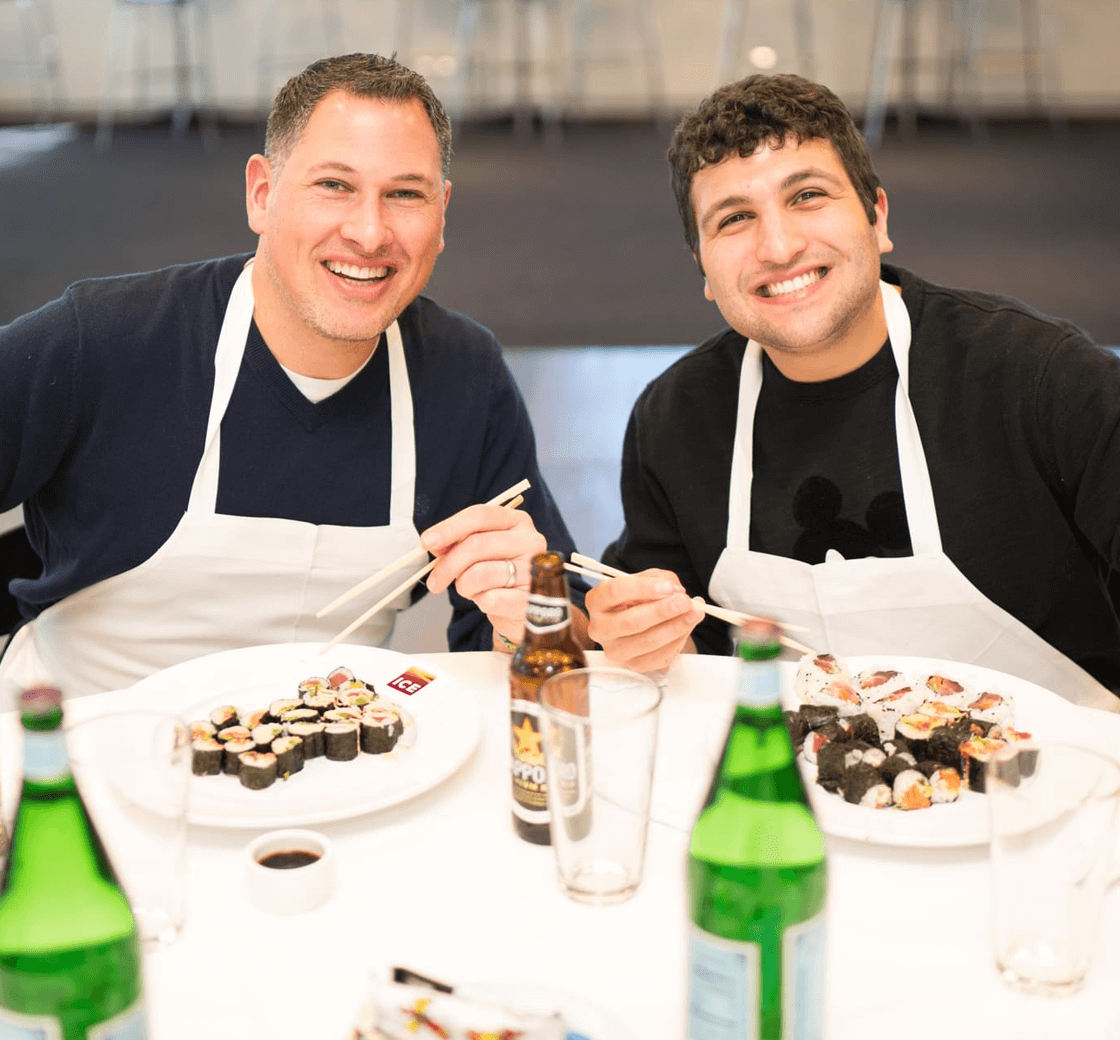
Before heading out to your local sushi bar for your next date night, come to ICE to learn how to create your own sushi and sake bar at home. Together, you'll start by learning the basics of how to make the foundation of all sushi: delicious, seasoned rice. You'll then create a variety of sushi accoutrements, along with vegetables and raw fish. Finally, you'll learn to make traditional hand rolls, maki, futomaki, and nigiri, before sitting down to eat with a refreshing glass of Japanese sake or a cucumber-sake cooler.
 One 3 Hour Lesson
 Level 1
 $300
$300
You will work in teams to execute the class menu. At the end of class, participants gather to enjoy the food they have prepared. Wine is served with meals in most classes. All class menus are subject to change. While a snack platter is offered in both morning and evening classes, you may want to consider a light snack before joining us for class. Students are encouraged to bring a light lunch or dinner to all pastry classes.
You will work in teams to execute the class menu. At the end of class, participants gather to enjoy the food they have prepared. Wine is served with meals in most classes. All class menus are subject to change. While a snack platter is offered in both morning and evening classes, you may want to consider a light snack before joining us for class. Students are encouraged to bring a light lunch or dinner to all pastry classes.
Sushi-making doesn't have to be limited to the view from a seat at your local Japanese restaurant. Bring the sushi bar home by practicing your skills at preparing nigiri (sashimi fish on top of thumb-size, compact sushi rice), perfecting the texture of rice, and learning the proper techniques to create a stellar hand roll. Once you've gotten the basics down, you will try your hand at: sushi rice; maki and futomaki rolls (both thin and thick), inside-out rolls; nigiri and temaki (hand roll).. You will soon learn that sushi is something you too can master.
There's nothing like handmade pasta's flavor and texture, and in this class, we'll have a blast leaning how to make fresh handmade pasta, stuffed pasta, perfect sauces and all the accompaniments! There's nothing like handmade pasta's flavor and texture. Together, we'll learn to make dough the Old World way, then how to shape, cut and stuff it. You and your partner will create a complete fresh Italian dinner of: pappardelle with Bolognese; burro e salvia (butternut squash ravioli with sage butter).
While handling poultry can seem daunting, it really can be a clucking good time! In Knife Skills 2 you'll discover the fundamental techniques required to transform a whole chicken into popular cuts. We'll cover such topics as trussing and spatchcocking, ensuring you leave with the confidence to tackle any chicken preparation in your home kitchen. No matter how you feel when you enter the class, the class promises to enhance your knowledge of poultry preparation and take your skills to the next level. While not a requirement, it helps to have practiced the skills of Knife Skills 1 before taking this class.
You want to make great food in a minimum amount of time, but don't have a clue how to go about it. Or you're on your own for the first time and have discovered that eating out is expensive and takeout is tiresome! You need a small repertoire of dishes for daily dining, but you can barely manage instant coffee. Does this sound like you? Then this is the course to take. We assume you know nothing --- absolutely nothing --- about cooking and take it from there. In three relaxed, fun-filled classes, we'll get you on your cooking feet, teaching you how to prepare simple, healthful, delicious food. You'll learn about basic cooking equipment and menu planning; knife skills, including vegetable chopping and paring; how to make salad, vinaigrette, and other easy no-cook dishes; how to roast garlic and root vegetables; how to prepare delicious pasta; how to sauté and roast meats and more; and how to make desserts in minutes. You will learn to make three complete meals in three easy lessons, including: guacamole and chips, make-your-own taco bar, tres leches cake; classic Caesar salad, roast Cornish hens with root vegetables, and blueberry crisp; shrimp cocktail and garlic bread, classic fettuccini alfredo, arugula and radicchio salad with apples and glazed walnuts, and ice cream tiramisu

Ranked as America’s Best Culinary School (USAToday 2019), our roster of Chef-Instructors have run top kitchens around the globe.


 Login/Register
 Calendar
 Gift Cards
 Login/Register


