
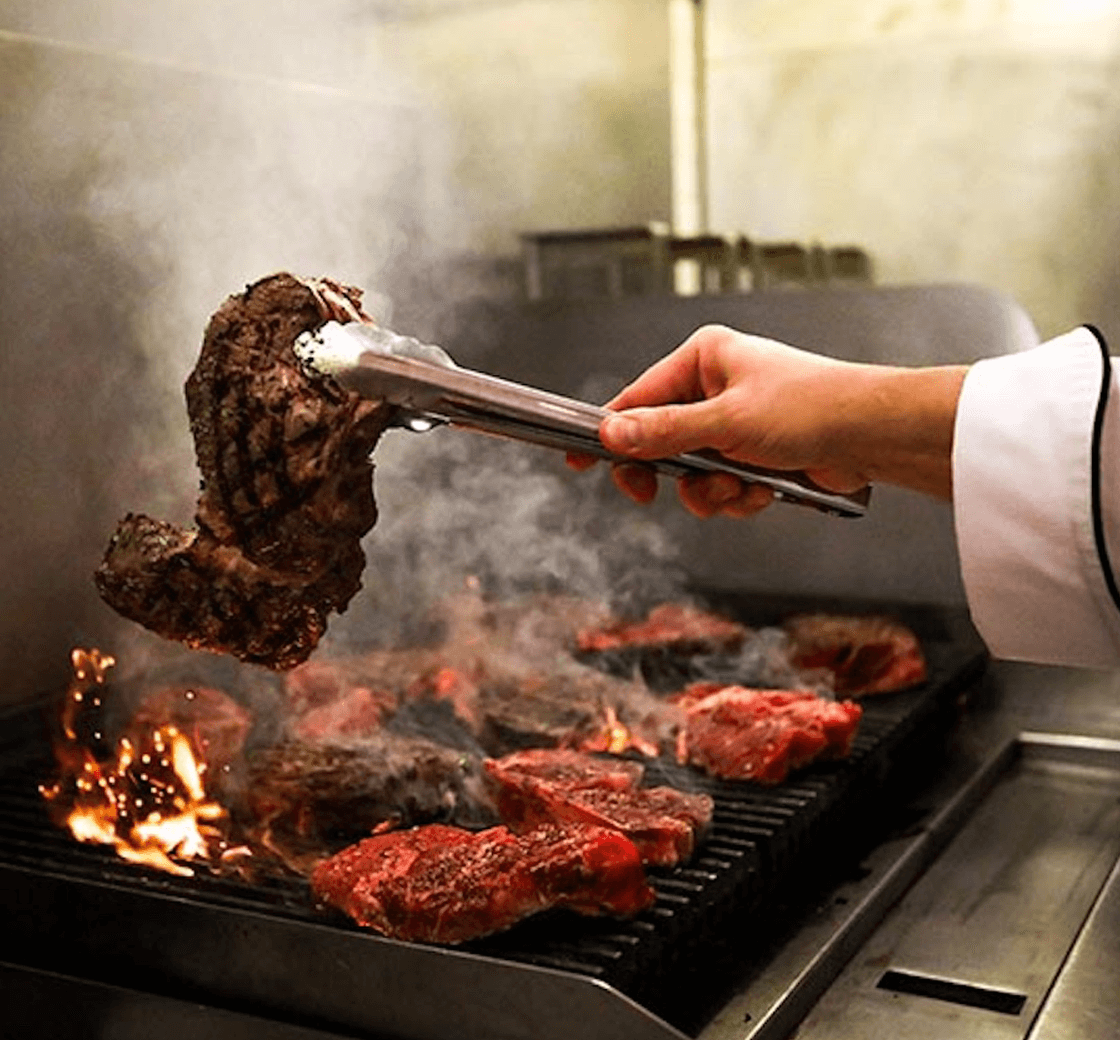
Grilling is one of the best ways to cook food simply while obtaining a maximum amount of flavor. You can grill on the stovetop, in your backyard, or over charcoal or gas. In this class you will learn how to modify your grilling technique depending on the medium used. You will also discuss how dry rubs and sauces are used on the grill, then put those lessons to use as you make: grilled steaks; shrimp skewers; chicken satay with peanut dipping sauce and grilled portobello mushrooms and zucchini.
 One 3 Hour Lesson
 Level 2
 $150
$150
You will work in teams to execute the class menu. At the end of class, participants gather to enjoy the food they have prepared. Wine is served with meals in most classes. All class menus are subject to change. While a snack platter is offered in both morning and evening classes, you may want to consider a light snack before joining us for class. Students are encouraged to bring a light lunch or dinner to all pastry classes.
You will work in teams to execute the class menu. At the end of class, participants gather to enjoy the food they have prepared. Wine is served with meals in most classes. All class menus are subject to change. While a snack platter is offered in both morning and evening classes, you may want to consider a light snack before joining us for class. Students are encouraged to bring a light lunch or dinner to all pastry classes.
If you can't get enough of the wonderful steaks, salads, and sides at Gotham's top eateries, join us for this follow-up to one of our most popular classes, The Great New York Steakhouse. In this iteration, we expand upon the classic dishes served at the most celebrated chophouses in this gastronomic city. On your menu: clams casino; wedge salad; filet mignon au poivre with cognac cream sauce; hand-cut fries and grilled asparagus.
If you're ready to take a deep dive into the world of fish butchery, this class is for you. Join us to learn the art of breaking down both round and flat fish with skill and finesse. From perfecting filleting technique to deskinning and deboning, you'll leave with the confidence to handle a variety of fish preparations in your own kitchen. This class will provide a foundation for you to feel confident tackling fish butchery. While not a requirement, it helps to have practiced the skills of Knife Skills 1 before taking this class.
You want to make great food in a minimum amount of time, but don't have a clue how to go about it. Or you're on your own for the first time and have discovered that eating out is expensive and takeout is tiresome! You need a small repertoire of dishes for daily dining, but you can barely manage instant coffee. Does this sound like you? Then this is the course to take. We assume you know nothing --- absolutely nothing --- about cooking and take it from there. In three relaxed, fun-filled classes, we'll get you on your cooking feet, teaching you how to prepare simple, healthful, delicious food. You'll learn about basic cooking equipment and menu planning; knife skills, including vegetable chopping and paring; how to make salad, vinaigrette, and other easy no-cook dishes; how to roast garlic and root vegetables; how to prepare delicious pasta; how to sauté and roast meats and more; and how to make desserts in minutes. You will learn to make three complete meals in three easy lessons, including: guacamole and chips, make-your-own taco bar, tres leches cake; classic Caesar salad, roast Cornish hens with root vegetables, and blueberry crisp; shrimp cocktail and garlic bread, classic fettuccini alfredo, arugula and radicchio salad with apples and glazed walnuts, and ice cream tiramisu
Come join NYC’s longest running wine course. Over its 45+ year history, thousands of students, food and wine professionals and the wine interested public alike, have participated in this program. This six-session course, crafted by ICE director of wine studies Richard Vayda, uses grape varietals, as well as winemaking regions, as the keys to understanding the full wine spectrum. You will receive a thorough introduction to winemaking, tasting, laws and labeling as you learn about wine components and taste some of the world’s most celebrated wines. In these six sessions, you will sample up to 60 wines! Session 1: Winemaking and Wine-Tasting Basics. Session 2: France: The Wines and Grapes of Burgundy and Bordeaux. Session 3: The Major Wines and Grape Varieties of Italy. Session 4: Spanish and other Warm-Climate Wines. Session 5: Wine Tour of the US West Coast. Session 6: A Tour of Sparkling Wine from Around the World.

Ranked as America’s Best Culinary School (USAToday 2019), our roster of Chef-Instructors have run top kitchens around the globe.


 Login/Register
 Calendar
 Gift Cards
 Login/Register


