
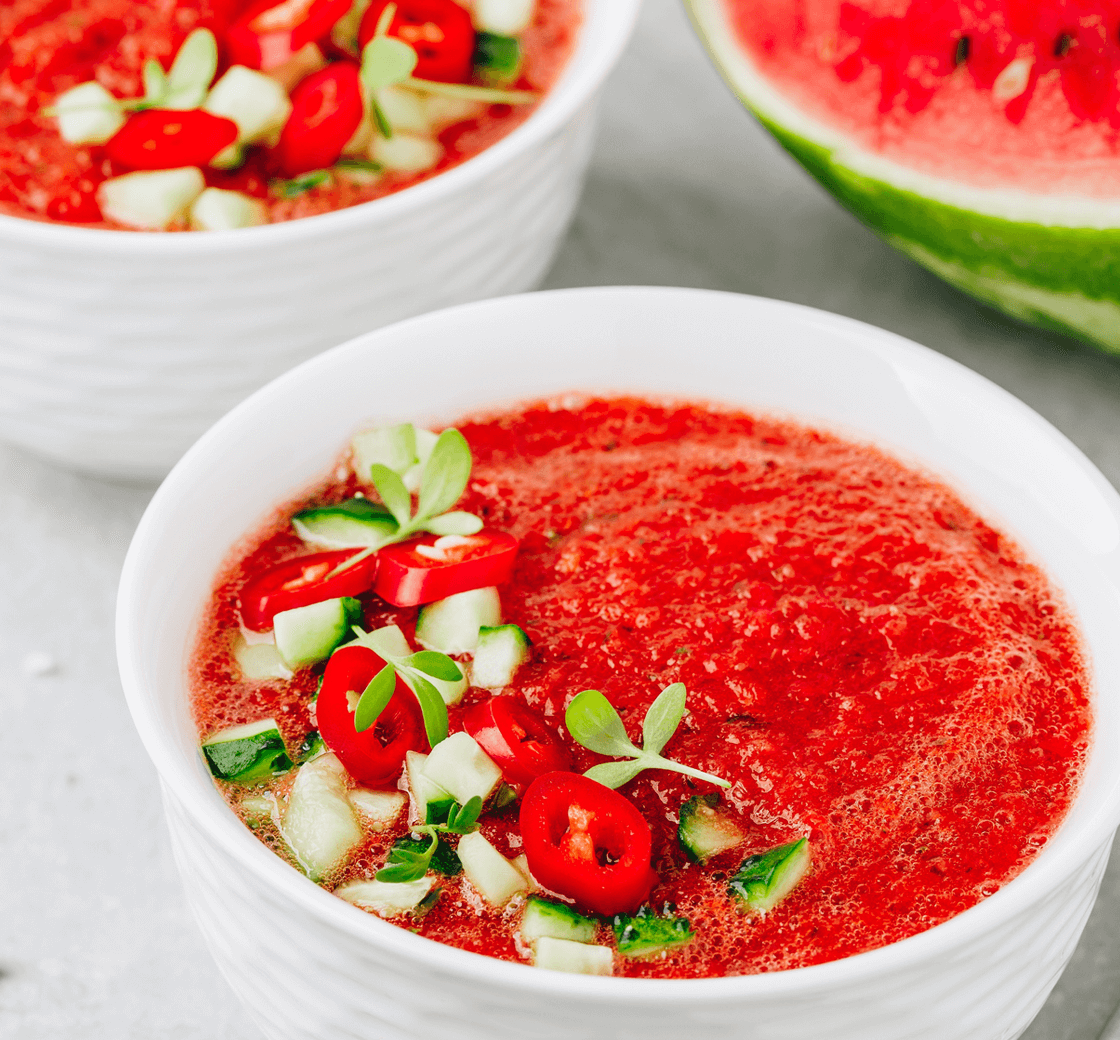
When it comes to healthy eating practices, no one can argue the importance of including whole-food, plant-based ingredients on your plate. We’ve taken the Meatless Monday campaign and applied it to any day of the week. Learn how to incorporate more vegetables, whole grains and beans into your diet with ease. These recipes will take you beyond Monday with robust yet simple-to-prepare vegan dishes. We'll also discuss the health benefits of a vegetarian diet, the best sources for protein, and how to obtain important vitamins and minerals. On your menu: watermelon gazpacho with kale chips and avocado crème; French lentil and toasted sunflower seed burgers with red cabbage slaw and grilled summer squash, zucchini and portobello mushroom kebabs.
 One 3 Hour Lesson
 Level 1
 $150
$150
You will work in teams to execute the class menu. At the end of class, participants gather to enjoy the food they have prepared. Wine is served with meals in most classes. All class menus are subject to change. While a snack platter is offered in both morning and evening classes, you may want to consider a light snack before joining us for class. Students are encouraged to bring a light lunch or dinner to all pastry classes.
You will work in teams to execute the class menu. At the end of class, participants gather to enjoy the food they have prepared. Wine is served with meals in most classes. All class menus are subject to change. While a snack platter is offered in both morning and evening classes, you may want to consider a light snack before joining us for class. Students are encouraged to bring a light lunch or dinner to all pastry classes.
One of the world's oldest cultures, China has a complex cuisine, with a range of regional dishes often not found anywhere outside of the country. Some techniques, ingredients and dishes are similar throughout all of China; this Essentials class focuses on those, giving you a well-rounded overview of Chinese food and culinary culture. From stir-frying and braising to steaming and red cooking, you will learn to use traditional Chinese techniques to make a menu that includes: scallion pancakes with dipping sauce; red-cooked chicken with rice; dan dan noodles; and Chinese broccoli with oyster sauce.
Celebrate summer's bounty with this delicious class focused on fresh fruit desserts. You'll master essential techniques for working with seasonal produce by baking four classic treats perfect for any occasion. We'll show you how to create the perfect balance of flavors and textures, from buttery shortcakes to crunchy crumble toppings. The menu includes Summer Berry Shortcake, a classic with light cakes, fresh berries, and cream; Peach and Blackberry Cobbler, featuring jammy fruit and a biscuit-like topping; Plum, Vanilla and Almond Crumble, a combination of sweet-tart plums with a nutty, crunchy topping; and Strawberry Rhubarb Crisp, the perfect duo under a buttery oat crust. Join us and bake your way to a sweet summer!
Unlock the rich flavors of West Africa in this "Essentials of West African Cooking" class! Journey through a diverse menu, starting with flavorful Jollof Fonio and Chicken Peanut Stew, then make sweet-meets-savory Fried Plantains. Finally, discover Egusi Soup thickened with melon seeds. Expand your culinary repertoire and bring a taste of West Africa to your home kitchen!
No one doesn't like doughnuts. That includes filled doughnuts, cake-style doughnuts, glazed doughnuts and much more. You'll learn how to make yeast and cake doughnut doughs; then create different fillings and toppings, including pastry creams and glazes. Our menu includes: Classic Yeast Doughnuts & Blueberry Cake Doughnuts with glazes and fillings!

Ranked as America’s Best Culinary School (USAToday 2019), our roster of Chef-Instructors have run top kitchens around the globe.


 Login/Register
 Calendar
 Gift Cards
 Login/Register


