
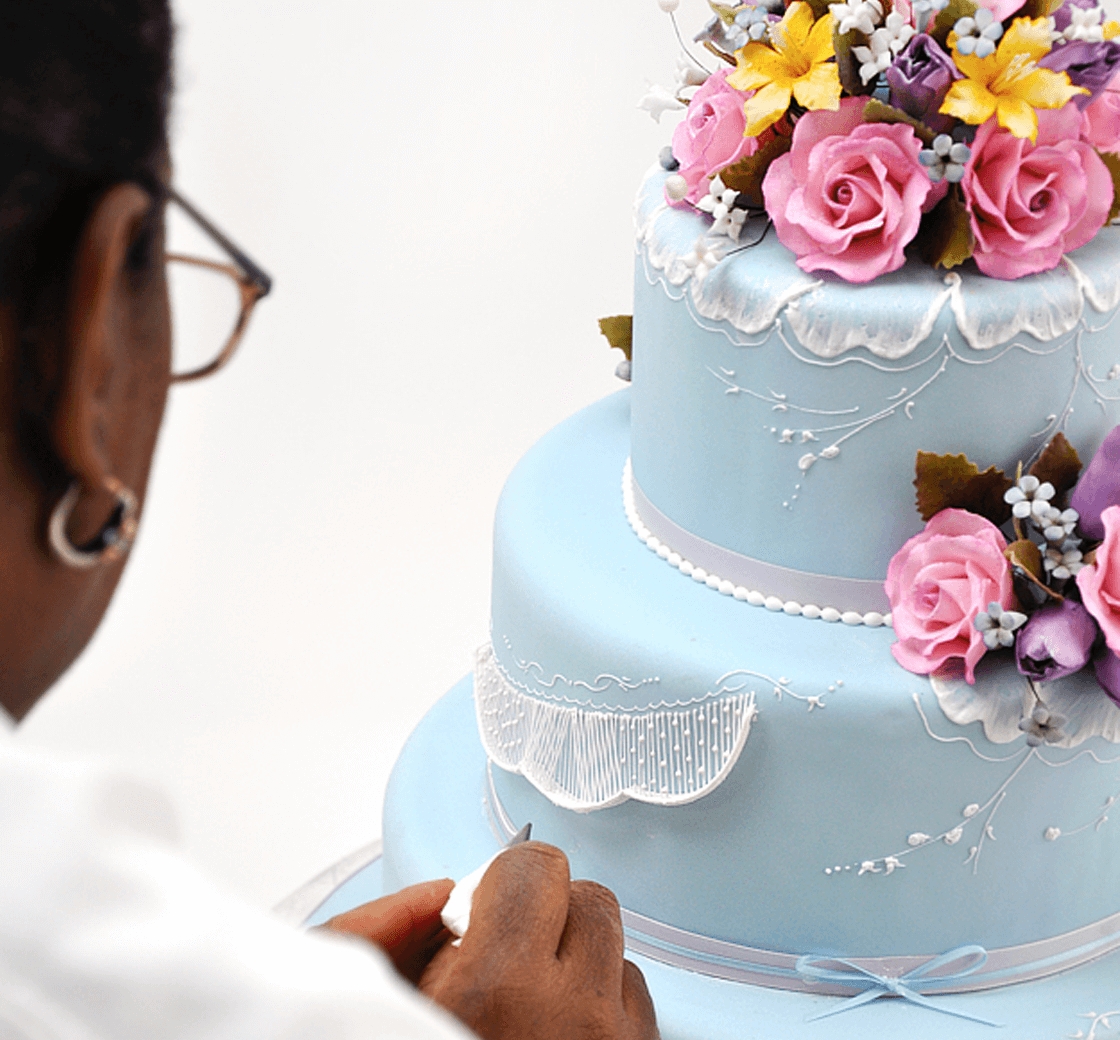
This series covers all you need to know to create spectacular piped and hand-molded cake decorations. After completing the class, students will be able to design and create gorgeous cakes for friends and family. Courses in this series must be taken in sequence. Prerequisite: Techniques of Cake Decorating 1. Cake Decorating 2: Rolled fondant; ruffling; extension work; royal icing lacework; brush embroidery; and gum paste flowers.
 Five 4 Hour Lessons
 Level 2
 $800
$800
You will work in teams to execute the class menu. At the end of class, participants gather to enjoy the food they have prepared. Wine is served with meals in most classes. All class menus are subject to change. While a snack platter is offered in both morning and evening classes, you may want to consider a light snack before joining us for class. Students are encouraged to bring a light lunch or dinner to all pastry classes.
You will work in teams to execute the class menu. At the end of class, participants gather to enjoy the food they have prepared. Wine is served with meals in most classes. All class menus are subject to change. While a snack platter is offered in both morning and evening classes, you may want to consider a light snack before joining us for class. Students are encouraged to bring a light lunch or dinner to all pastry classes.
American Regional Favorites: Northeast explores the dishes and traditions that define Northeastern cooking. You’ll prepare iconic regional recipes while learning the techniques and seasonings that shape the cuisine. The menu features Maryland crab cakes, New England corn chowder, a classic Philly cheesesteak, and blueberry coffee cake.
Travel the world with hearty and vibrant vegetarian entrees from around the globe! These international standouts will quickly become your go-to recipes for any day of the week. Healthful, flavor-packed and a snap to make, this is a menu you'll love learning together. We'll make all three dishes, from comfort food to Asian specialties to Mexican mains, then sit down to this meal of: sesame-crusted Asian tofu with garlic-fried wild rice; enchiladas suizas with cheese and roasted vegetables; and orecchiette pasta with roasted cauliflower and caramelized onions.
Join an ICE chef for this delightful class on all things pizza. Together, couples will learn to make a quick-rise pizza dough to be topped with a variety of culinary creations: sauce and cheese will meet veggies, mushrooms, cured and fresh-cooked meats --- even sweet options for dessert pizza. Then you’ll sit down to each fresh-from-the-oven pie with a choice selection of pizza-perfect wines that pair with your imaginative culinary creations.
You want to make great food in a minimum amount of time, but don't have a clue how to go about it. Or you're on your own for the first time and have discovered that eating out is expensive and takeout is tiresome! You need a small repertoire of dishes for daily dining, but you can barely manage instant coffee. Does this sound like you? Then this is the course to take. We assume you know nothing --- absolutely nothing --- about cooking and take it from there. In three relaxed, fun-filled classes, we'll get you on your cooking feet, teaching you how to prepare simple, healthful, delicious food. You'll learn about basic cooking equipment and menu planning; knife skills, including vegetable chopping and paring; how to make salad, vinaigrette, and other easy no-cook dishes; how to roast garlic and root vegetables; how to prepare delicious pasta; how to sauté and roast meats and more; and how to make desserts in minutes. You will learn to make three complete meals in three easy lessons, including: guacamole and chips, make-your-own taco bar, tres leches cake; classic Caesar salad, roast Cornish hens with root vegetables, and blueberry crisp; shrimp cocktail and garlic bread, classic fettuccini alfredo, arugula and radicchio salad with apples and glazed walnuts, and ice cream tiramisu

Ranked as America’s Best Culinary School (USAToday 2019), our roster of Chef-Instructors have run top kitchens around the globe.


 Login/Register
 Calendar
 Gift Cards
 Login/Register


