
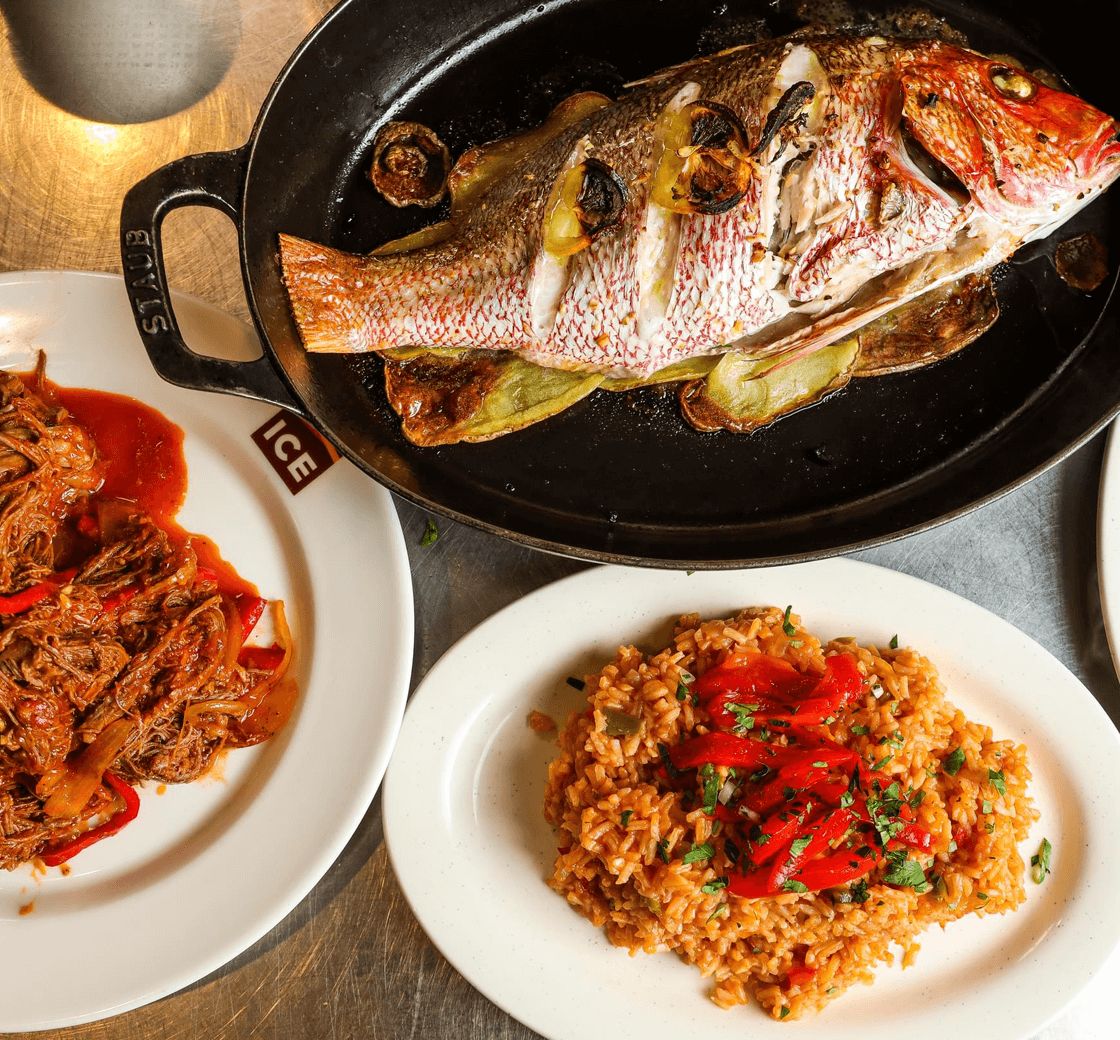
The flavorful cuisine of Cuba reflects the country’s Spanish, African and Caribbean influences. From cooling ceviche to hearty ropa vieja, these influences manifest themselves in an array of seafood and meat preparations, not to mention unforgettable side dishes that will make you wonder why you didn't cook Cuban sooner. You will make ropa vieja (shredded flank steak in tomato sauce); pescado enchilado (sea bass in sofrito); frijoles negros (black beans Cuban-style); rice and tostones (savory fried plantains).
 One 3 Hour Lesson
 Level 2
 $150
$150
You will work in teams to execute the class menu. At the end of class, participants gather to enjoy the food they have prepared. Wine is served with meals in most classes. All class menus are subject to change. While a snack platter is offered in both morning and evening classes, you may want to consider a light snack before joining us for class. Students are encouraged to bring a light lunch or dinner to all pastry classes.
You will work in teams to execute the class menu. At the end of class, participants gather to enjoy the food they have prepared. Wine is served with meals in most classes. All class menus are subject to change. While a snack platter is offered in both morning and evening classes, you may want to consider a light snack before joining us for class. Students are encouraged to bring a light lunch or dinner to all pastry classes.
Evoke the Old World with these nonna-approved classic desserts, creating flavors that instantly transport you to Italy (or Little Italy!). We'll use pignoli nuts to bake perfectly light cookies, set the custard for a rich panna cotta and more! Your traditional dessert menu includes: tiramisu; panna cotta; and pignoli cookies.
These delightful cupcakes come in a range of flavors and frostings, not to mention some well-matched fillings. As we make the cakes, fillings and frostings from scratch, we'll pair strawberry with vanilla, chocolate with white chocolate ganache, peanut butter with chocolate icing, and even birthday cupcakes with a piñata surprise of sprinkles inside. Your cupcake menu: strawberry shortcake with vanilla bean cake and whipped vanilla bean buttercream; chocolate trio with dark chocolate cake, white chocolate ganache and milk chocolate frosting; birthday "piñata" cupcakes with sprinkle buttercream; and peanut butter and chocolate cupcakes with peanut butter frosting.
Sharpen your shellfish butchery skills in Knife Skills 4! This hands-on class teaches you the techniques required to prepare a seafood feast. Learn to handle and break down lobster (and make a refreshing lobster salad), and master the art of shucking oysters and clams (and enjoy oysters with mignonette and a modern Clams Casino). You’ll also make succulent Shrimp Scampi and perfectly crisp Fried Calamari. Elevate your culinary confidence and impress friends with your newfound shellfish prowess!
New York City has some of the most famous steakhouses in the country. These classic establishments are known for a distinctive homey atmosphere and a trademark cuisine that has been pleasing diners for decades. Spend an evening learning the techniques and recipes you need to replicate your favorite steakhouse experience at home. You'll make and enjoy classic shrimp cocktail; Caesar salad; grilled New York strip with beurre Maître d'Hôtel; creamed spinach and truffled mashed potatoes.

Ranked as America’s Best Culinary School (USAToday 2019), our roster of Chef-Instructors have run top kitchens around the globe.


 Login/Register
 Calendar
 Gift Cards
 Login/Register


