
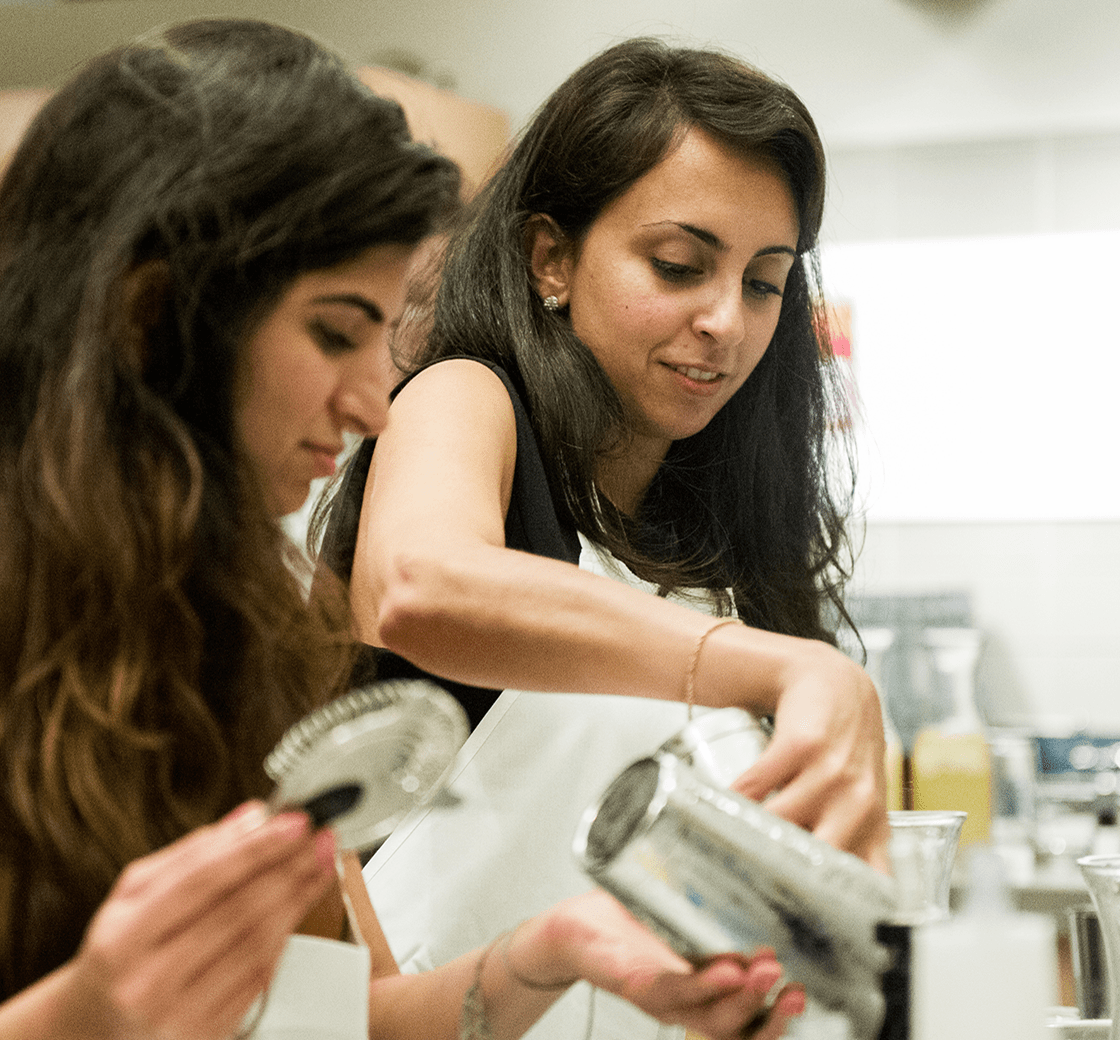
Step down from the barstool — and go behind the bar instead! This Mixology 101 class teaches the foundational cocktail-making skills and techniques used by professional bartenders. (Much like “knife skills” is the first course taken by aspiring culinarians, Mixology 101 is the first building block toward more comprehensive cocktail knowledge.) This class covers: highball, old fashioned, martini, daiquiri , sidecar/daisy, and flips
 One 2 Hour Lesson
 Level 1
 $100
$100
You will work in teams to execute the class menu. At the end of class, participants gather to enjoy the food they have prepared. Wine is served with meals in most classes. All class menus are subject to change. While a snack platter is offered in both morning and evening classes, you may want to consider a light snack before joining us for class. Students are encouraged to bring a light lunch or dinner to all pastry classes.
You will work in teams to execute the class menu. At the end of class, participants gather to enjoy the food they have prepared. Wine is served with meals in most classes. All class menus are subject to change. While a snack platter is offered in both morning and evening classes, you may want to consider a light snack before joining us for class. Students are encouraged to bring a light lunch or dinner to all pastry classes.
This fun class is especially designed for chile-heads. Couples will collaborate to cook an international menu that hits every region of the hot-and-spicy world --- along with cooling, refreshing cocktails. Your menu includes: blistered shishito peppers; Nigerian beef suya skewers; Korean buldak ("fiery chicken"); cooling cucumber salad; and Thai iced tea.
Take a trip to the Mediterranean with "Essentials of Greek Cooking." This class reveals the secrets behind beloved Greek dishes by focusing on fresh ingredients and traditional techniques. You'll learn to make flaky, savory Spanakopita; master the art of delicate Dolmades (stuffed grape leaves) with bright Avgolemeno sauce; prepare a classic Horiatiki Salad; and create comforting Kota Kapama (a flavorful chicken and orzo dish simmered in a rich tomato sauce). Immerse yourself in the vibrant flavors and traditions of Greek cuisine!
From bibimbap to bulgogi, the signature dishes of Korea have seduced America with intoxicating flavors. Sweet-spicy flavor combos are popular, as are the vegetables, meat and seafood that are featured in main dishes as well as in banchan, the Korean assortment of side dishes that appears in most traditional meals. You will learn to make dakgangjeong (hot chicken wings); bulgogi (grilled seasoned sliced beef) with assorted banchan; and bibimbap (seasoned vegetable rice bowl).

Ranked as America’s Best Culinary School (USAToday 2019), our roster of Chef-Instructors have run top kitchens around the globe.


 Login/Register
 Calendar
 Gift Cards
 Login/Register


