
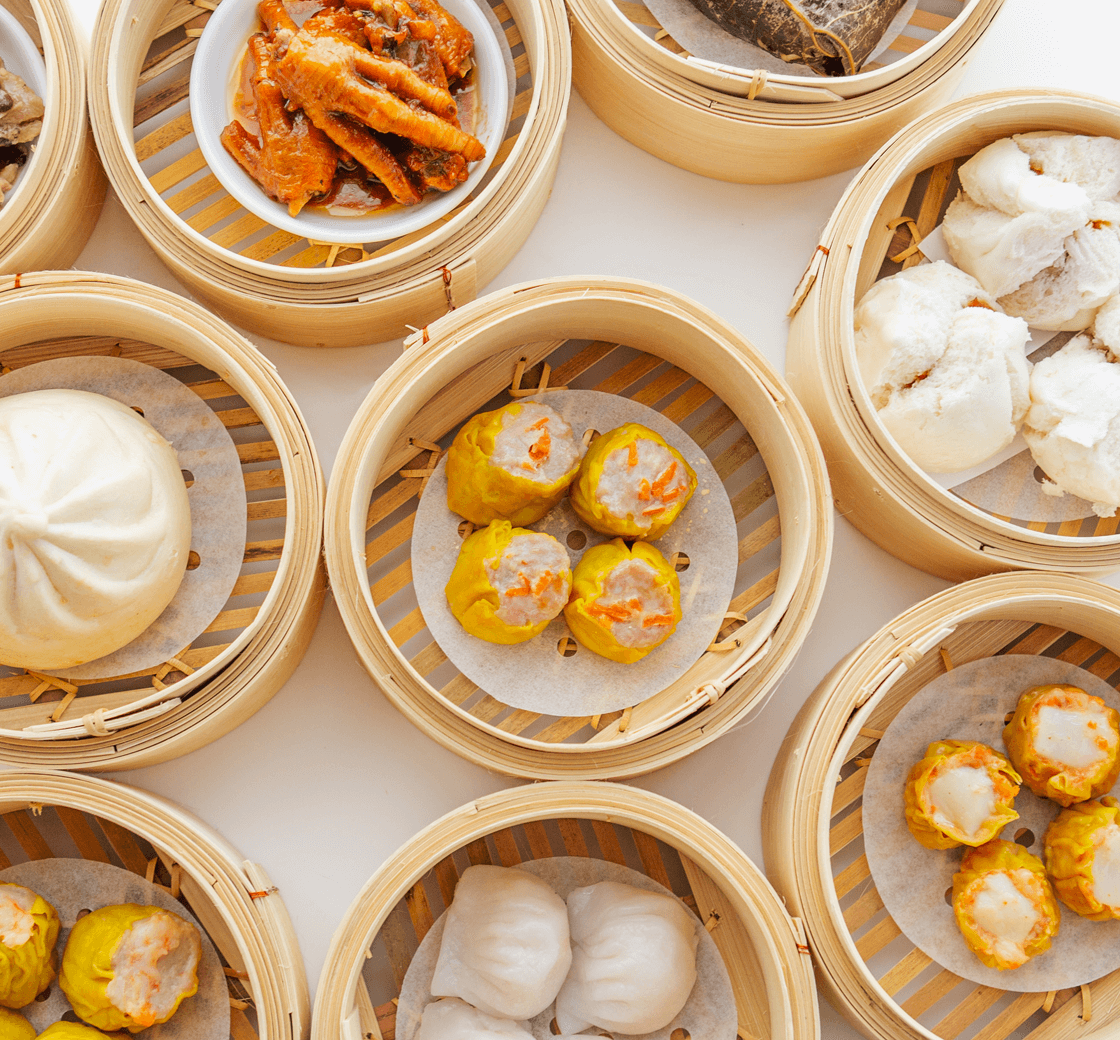
Sitting down to an assortment of dim sum in a bustling restaurant is the culmination of a weekend stroll through Chinatown. It's never easy to choose from the myriad of delicacies that pass by the table, or to not try just one more thing. In this class, you will learn to prepare a variety of popular dim sum dishes, to impress family and friends with a feast of your own. You will make: shrimp shao mai; spring rolls; spareribs with balck bean sauce, and pan-fried vegetable dumplings with spicy dipping sauce.
 One 3 Hour Lesson
 Level 2
 $150
$150
You will work in teams to execute the class menu. At the end of class, participants gather to enjoy the food they have prepared. Wine is served with meals in most classes. All class menus are subject to change. While a snack platter is offered in both morning and evening classes, you may want to consider a light snack before joining us for class. Students are encouraged to bring a light lunch or dinner to all pastry classes.
You will work in teams to execute the class menu. At the end of class, participants gather to enjoy the food they have prepared. Wine is served with meals in most classes. All class menus are subject to change. While a snack platter is offered in both morning and evening classes, you may want to consider a light snack before joining us for class. Students are encouraged to bring a light lunch or dinner to all pastry classes.
Master the art of baking perfect Focaccia in this hands-on class! Discover the secrets to a satisfyingly textured flatbread, from mixing the simple dough to achieving an airy crumb and crisp crust. Learn expert techniques for hydration, the crucial first rise, and the signature dimpling. Elevate your Focaccia with gourmet toppings: thinly sliced Yukon gold potatoes, sweet caramelized yellow onions, vibrant plum tomatoes, fragrant fresh rosemary, rich grated parmesan, and briny Kalamata olives. Leave with the confidence to bake exquisite Focaccia and impress with sophisticated flavor combinations!
Celebrate summer's bounty with this delicious class focused on fresh fruit desserts. You'll master essential techniques for working with seasonal produce by baking four classic treats perfect for any occasion. We'll show you how to create the perfect balance of flavors and textures, from buttery shortcakes to crunchy crumble toppings. The menu includes Summer Berry Shortcake, a classic with light cakes, fresh berries, and cream; Peach and Blackberry Cobbler, featuring jammy fruit and a biscuit-like topping; Plum, Vanilla and Almond Crumble, a combination of sweet-tart plums with a nutty, crunchy topping; and Strawberry Rhubarb Crisp, the perfect duo under a buttery oat crust. Join us and bake your way to a sweet summer!
Explore the unique ingredients, simple techniques and sometimes fiery recipes of Thai cooking, one of the most distinctive of Southeast Asia. You’ll learn to cook authentic versions of some of the country’s most popular recipes. You’ll make: summer rolls with dipping sauce; satay with peanut sauce; yellow curry chicken; jasmine rice and pad Thai.
This fun class is especially designed for chile-heads. Couples will collaborate to cook an international menu that hits every region of the hot-and-spicy world --- along with cooling, refreshing cocktails. Your menu includes: blistered shishito peppers; Nigerian beef suya skewers; Korean buldak ("fiery chicken"); cooling cucumber salad; and Thai iced tea.

Ranked as America’s Best Culinary School (USAToday 2019), our roster of Chef-Instructors have run top kitchens around the globe.


 Login/Register
 Calendar
 Gift Cards
 Login/Register


