
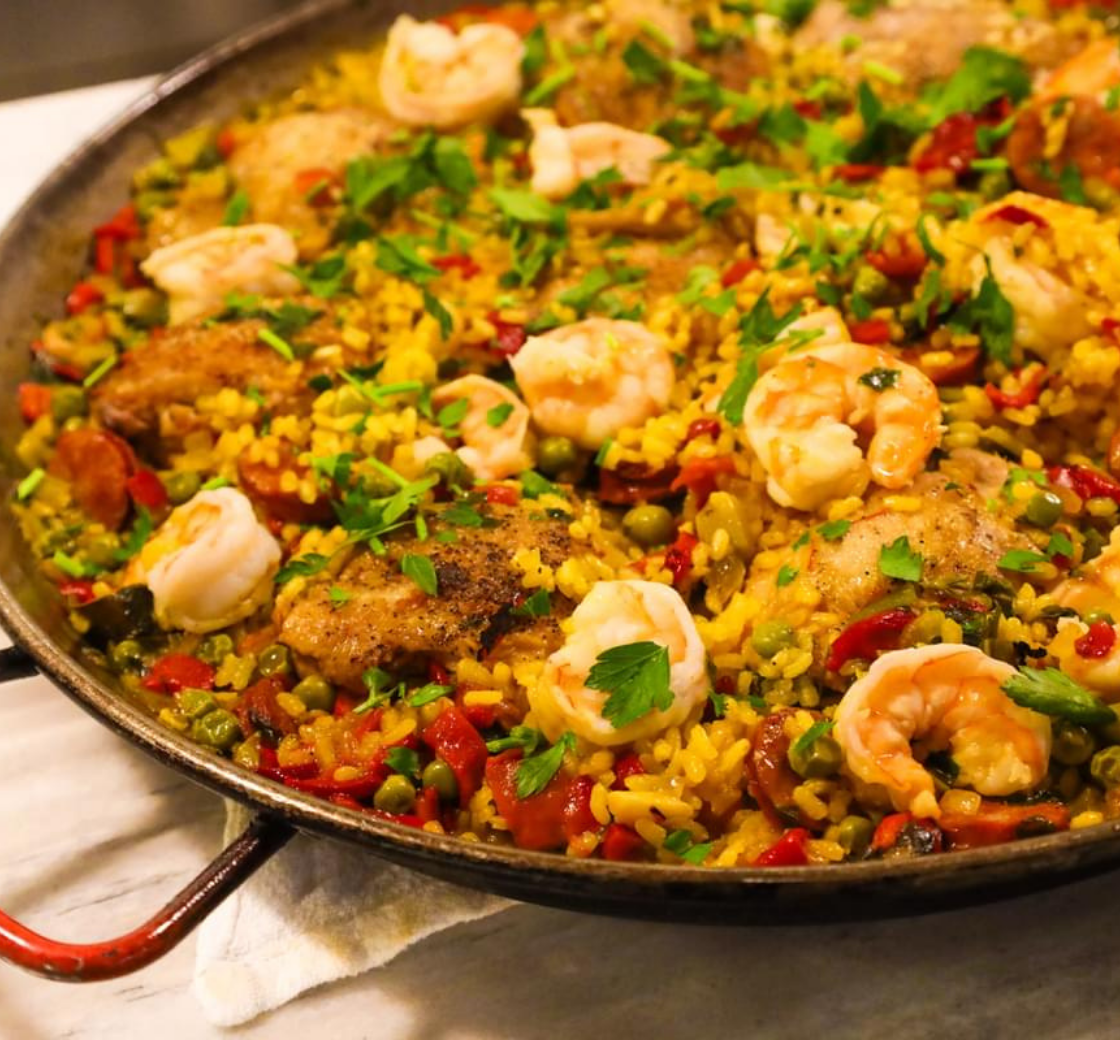
Make the one-pot profusion of Spanish flavors that paella comprises --- seafood, chicken, chorizo, rice and more --- come to life. You'll learn to make masterful cuttlefish-ink paella and paella from Valencia, in addition to some spectacular Spanish tapas. Your menu includes: garlic shrimp; tortilla española; arroz negro paella; and paella valenciana (paella with shrimp, chicken and chorizo).
 One 3 Hour Lesson
 Level 2
 $150
$150
You will work in teams to execute the class menu. At the end of class, participants gather to enjoy the food they have prepared. Wine is served with meals in most classes. All class menus are subject to change. While a snack platter is offered in both morning and evening classes, you may want to consider a light snack before joining us for class. Students are encouraged to bring a light lunch or dinner to all pastry classes.
You will work in teams to execute the class menu. At the end of class, participants gather to enjoy the food they have prepared. Wine is served with meals in most classes. All class menus are subject to change. While a snack platter is offered in both morning and evening classes, you may want to consider a light snack before joining us for class. Students are encouraged to bring a light lunch or dinner to all pastry classes.
Let's eat like we're in Italy, from the apps all the way through to a rich dessert! These dishes put you back in that Mediterranean mindset...even if you've never been there. Make and sit down to this warm, comforting Italian banquet of: fried zucchini with Parmesan; veal saltimbocca alla romana; spaghetti carbonara; cavolfiore alla napoletana (cauliflower with raisins and pine nuts).
Whether you like your pizza with a thick or a thin crust, with tons of sauce or no tomato at all, this class will give you a repertoire that includes just about everyone’s favorite. You’ll start by learning to make pizza dough, and while the dough is rising, prepare various toppings. You’ll learn the best baking techniques and work hands-on to make the following: pizza dough; tomato sauce; pesto sauce; pizza toppings including prosciutto, fresh herbs and sautéed vegetables; and dessert pizza with Nutella and fresh fruit.
A bold blend of East Asia, Southeast Asia and France, Vietnamese food captivates through its refreshing flavors, varied textures and vibrant colors. In this class, you will explore the fundamental techniques and ingredients behind some of Vietnam's treasured dishes, including goi dua chuot (cucumber and shrimp salad); Banh Mi (baguette sandwiches filled with five-spice beef and pickled vegetables) and Ga Xao Xa Ot (chicken stir-fried with lemongrass and chile).
Austria and Germany are not often the first places people think of when it comes to wine. Too bad, because Austria is much more than just Grüner Veltliner. Although Germany’s Rieslings are considered some of the world’s best, there is much more to explore. During this wine tour, Richard Vayda, ICE’s resident sommelier, will help demystify the grapes, regulations and labeling that often keep wine lovers away from these great selections. The tasting will include some light matching snacks to accompany these food-friendly wines.

Ranked as America’s Best Culinary School (USAToday 2019), our roster of Chef-Instructors have run top kitchens around the globe.


 Login/Register
 Calendar
 Gift Cards
 Login/Register


