
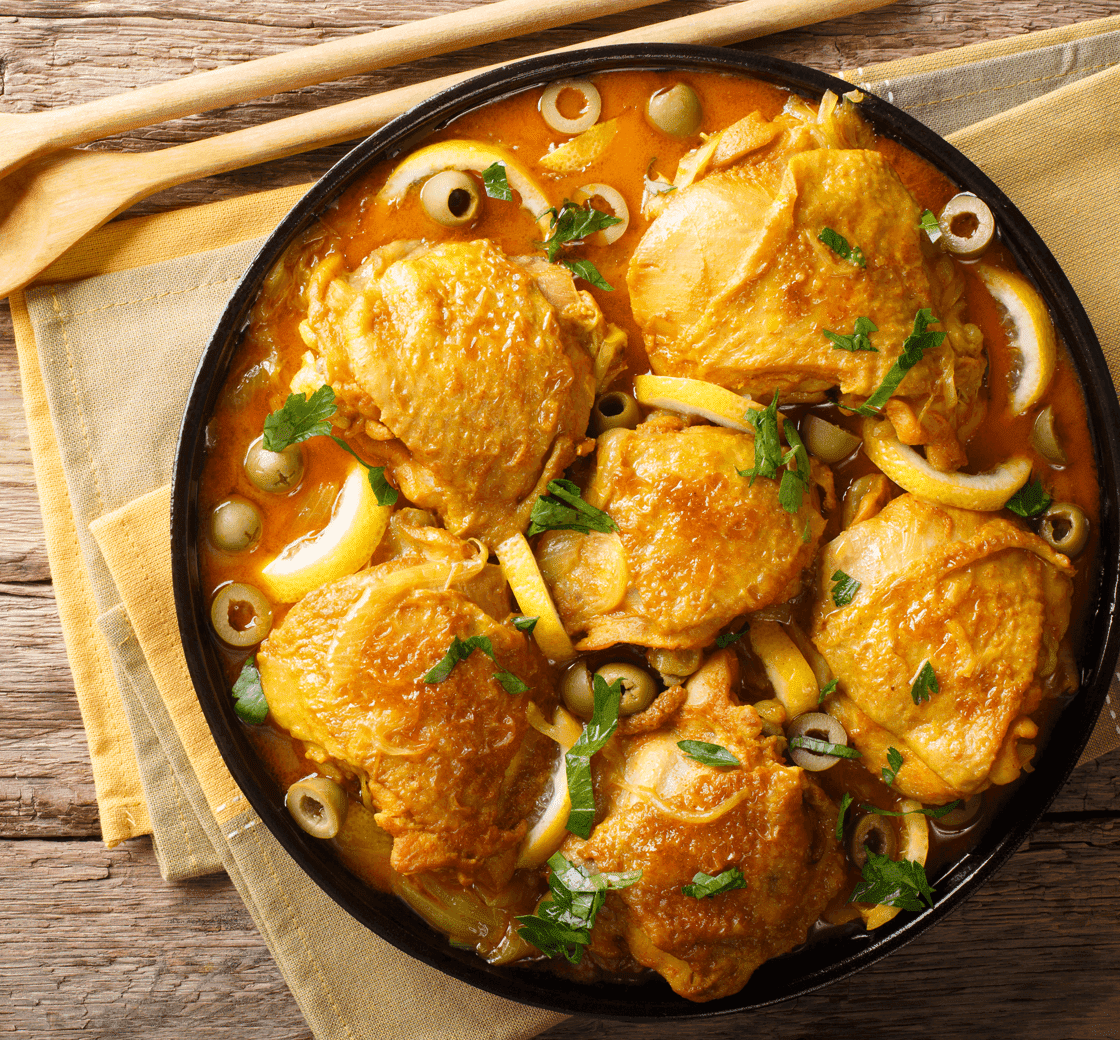
The history, culture and geography of Morocco are all richly evocative. It is easy to imagine yourself sipping mint tea while sitting on a terrace in Casablanca or Marrakech, or hiking the Atlas Mountains. The cuisine of Morocco reflects its Berber, Mediterranean, African and European influences, with a generous use of powerful spices. In this class, you will make some of the most acclaimed dishes of the Moroccan repertoire, including: grilled kefta (lamb) kebabs; chicken tagine with preserved lemons and olives; sweet spiced couscous; carrot salad with lemon-herb dressing and harissa.
 One 3 Hour Lesson
 Level 1
 $150
$150
You will work in teams to execute the class menu. At the end of class, participants gather to enjoy the food they have prepared. Wine is served with meals in most classes. All class menus are subject to change. While a snack platter is offered in both morning and evening classes, you may want to consider a light snack before joining us for class. Students are encouraged to bring a light lunch or dinner to all pastry classes.
You will work in teams to execute the class menu. At the end of class, participants gather to enjoy the food they have prepared. Wine is served with meals in most classes. All class menus are subject to change. While a snack platter is offered in both morning and evening classes, you may want to consider a light snack before joining us for class. Students are encouraged to bring a light lunch or dinner to all pastry classes.
Cocktails and Apps Summer Edition is the perfect way to enjoy a summer evening with new friends while sipping on two great new cocktails! Come mix it up with our Chef as you are professionally guided through these tasty and easy to make appetizers: light and delicious Frito Misto, spicy and fresh Gazpacho Shots, savory and sweet grilled peaches and prosciutto crostini, warm and inviting crab dip with fresh tortilla chips and tangy chili lime summer snack mix. Wash it all down with Yuzo Mojitos and Rose Aperol Spritzes! Looking to keep it alcohol free? You'll love our NA sparkling Rose!
Asian cuisine is comforting, flavorful and often fairly simple to prepare. So why order in for Chinese, Korean, Thai or Japanese, when you can create a fabulous Asian meal for two (or more) that's fresh and fulfilling? Come to ICE to learn these cornerstones of Asian cuisine, including: spareribs with black bean sauce; vegetable potstickers; pad thai; and green papaya salad.
Sitting down to an assortment of dim sum in a bustling restaurant is the culmination of a weekend stroll through Chinatown. It's never easy to choose from the myriad of delicacies that pass by the table, or to not try just one more thing. In this class, you will learn to prepare a variety of popular dim sum dishes, to impress family and friends with a feast of your own. You will make: shrimp shao mai; spring rolls; spareribs with balck bean sauce, and pan-fried vegetable dumplings with spicy dipping sauce.

Ranked as America’s Best Culinary School (USAToday 2019), our roster of Chef-Instructors have run top kitchens around the globe.


 Login/Register
 Calendar
 Gift Cards
 Login/Register


