
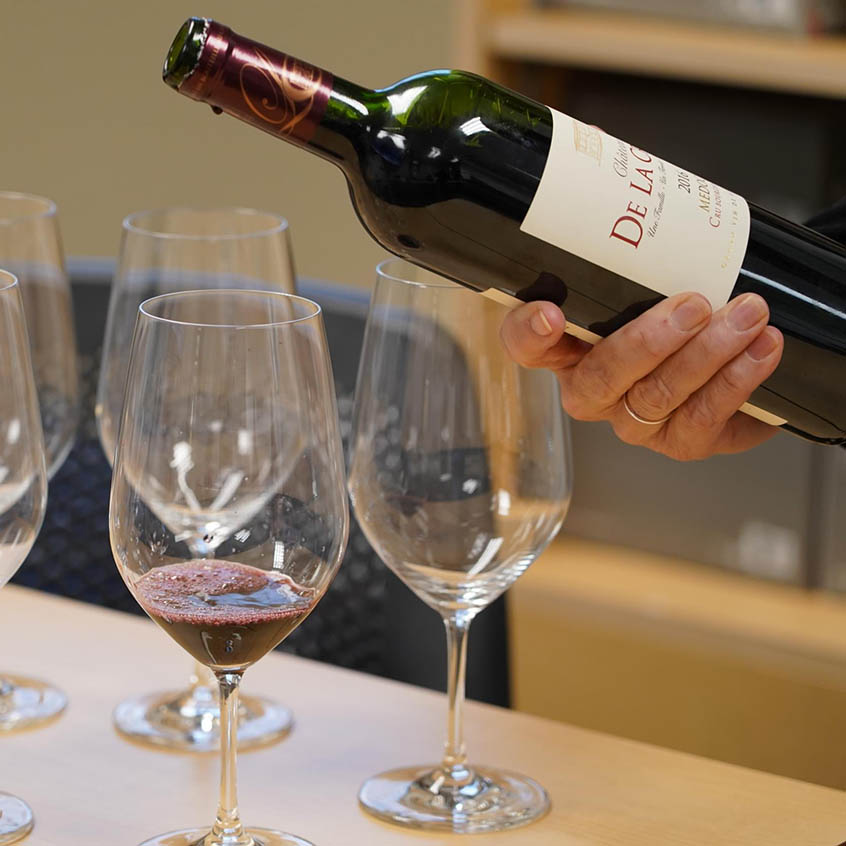
Tuition is $275 for two. Convinced that too many people are intimidated by champagne, and tend to tiptoe around it instead of enjoying it and serving it with food, ICE’s resident sommelier Ron Ciavolino created a class that offers a beautiful hors d’oeuvre buffet along with a select group of vintages. Your evening begins with a formal presentation and tasting of various sparkling wines---from non-vintage to vintage rosé. During the second half, you will help themselves to a buffet that calls on the flavors of many nations, and enjoy glasses of several selected vintages. By evening’s end, you will be convinced of the enormous flexibility of sparkling wines!
 One 2 Hour Lesson
 Level 1
 $275
$275
You will work in teams to execute the class menu. At the end of class, participants gather to enjoy the food they have prepared. Wine is served with meals in most classes. All class menus are subject to change. While a snack platter is offered in both morning and evening classes, you may want to consider a light snack before joining us for class. Students are encouraged to bring a light lunch or dinner to all pastry classes.
You will work in teams to execute the class menu. At the end of class, participants gather to enjoy the food they have prepared. Wine is served with meals in most classes. All class menus are subject to change. While a snack platter is offered in both morning and evening classes, you may want to consider a light snack before joining us for class. Students are encouraged to bring a light lunch or dinner to all pastry classes.
One of the world's oldest cultures, China has a complex cuisine, with a range of regional dishes often not found anywhere outside of the country. Some techniques, ingredients and dishes are similar throughout all of China; this Essentials class focuses on those, giving you a well-rounded overview of Chinese food and culinary culture. From stir-frying and braising to steaming and red cooking, you will learn to use traditional Chinese techniques to make a menu that includes: scallion pancakes with dipping sauce; red-cooked chicken with rice; dan dan noodles; and Chinese broccoli with oyster sauce.
Step down from the barstool — and go behind the bar instead! This Mixology 101 class teaches the foundational cocktail-making skills and techniques used by professional bartenders. (Much like “knife skills” is the first course taken by aspiring culinarians, Mixology 101 is the first building block toward more comprehensive cocktail knowledge.) This class covers: highball, old fashioned, martini, daiquiri , sidecar/daisy, and flips
Enjoy Spain right here in New York as you feast on tapas --- one of the great pleasures of Spanish culture. You'll make merry with these classic and contemporary small plates featuring all the flavors of the Mediterranean. After we cook, the party begins. We'll enjoy: pan con tomate with salt-cured anchovies; patatas bravas with aioli and chives; jamón croquetas; gambas al ajillo; and red wine sangria.
Make the one-pot profusion of Spanish flavors that paella comprises --- seafood, chicken, chorizo, rice and more --- come to life. You'll learn to make masterful cuttlefish-ink paella and paella from Valencia, in addition to some spectacular Spanish tapas. Your menu includes: garlic shrimp; tortilla española; arroz negro paella; and paella valenciana (paella with shrimp, chicken and chorizo).

Ranked as America’s Best Culinary School (USAToday 2019), our roster of Chef-Instructors have run top kitchens around the globe.


 Login/Register
 Calendar
 Gift Cards
 Login/Register


