
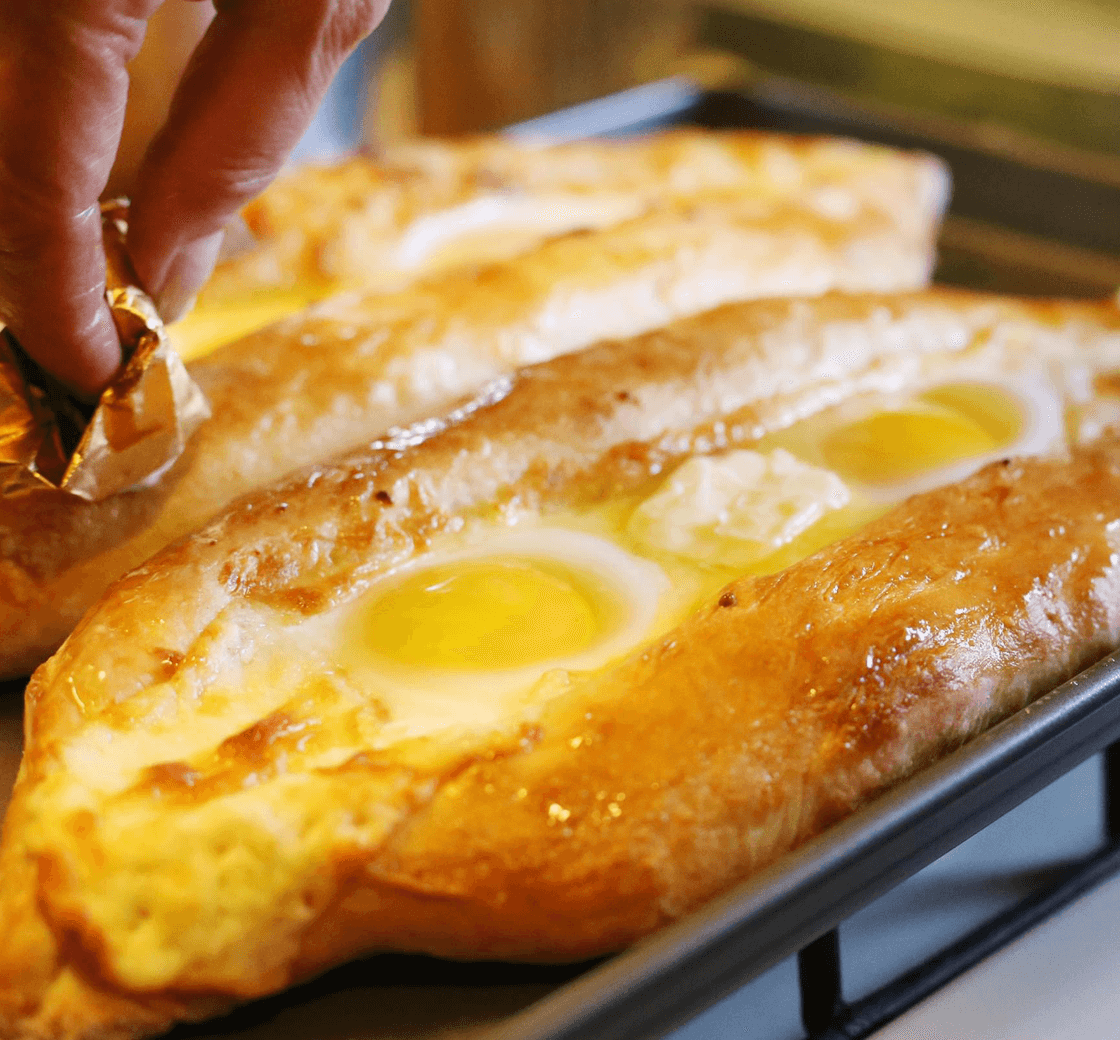
Georgian cuisine is finally being recognized for its variety, and the depth of flavors and techniques that characterize its unique culinary traditions. Given the country's location at the exact intersection of Europe and Asia, influences from both cultures have informed the dishes that the region is known for. From the banks of the Black Sea to the Caucasus Mountains, the land provides herbs, nuts and vegetables used in all aspects of its culinary traditions. You’ll become acquainted with the new "it" cuisine as you prepare: adjaruli khachapuri (cheese bread); nigvziani badrijani (stuffed eggplant rolls); tabaka (chicken cooked "under a brick") with blackberry sauce; and chakapuli (braised lamb with tarragon sauce).
 One 3 Hour Lesson
 Level 1
 $150
$150
You will work in teams to execute the class menu. At the end of class, participants gather to enjoy the food they have prepared. Wine is served with meals in most classes. All class menus are subject to change. While a snack platter is offered in both morning and evening classes, you may want to consider a light snack before joining us for class. Students are encouraged to bring a light lunch or dinner to all pastry classes.
You will work in teams to execute the class menu. At the end of class, participants gather to enjoy the food they have prepared. Wine is served with meals in most classes. All class menus are subject to change. While a snack platter is offered in both morning and evening classes, you may want to consider a light snack before joining us for class. Students are encouraged to bring a light lunch or dinner to all pastry classes.
Expand your knowledge and techniques in preparing dishes using fresh pasta dough, homemade sauces, fresh herbs, and more. Over the course of the evening, you will learn to create intricate, trattoria-quality pastas, such as: Potato Gnocchi with Gorgonzola Sauce; Ricotta Cavatelli with Peas, Mint and Lemon; and Spaghetti Carbonara.

Ranked as America’s Best Culinary School (USAToday 2019), our roster of Chef-Instructors have run top kitchens around the globe.


 Login/Register
 Calendar
 Gift Cards
 Login/Register


