
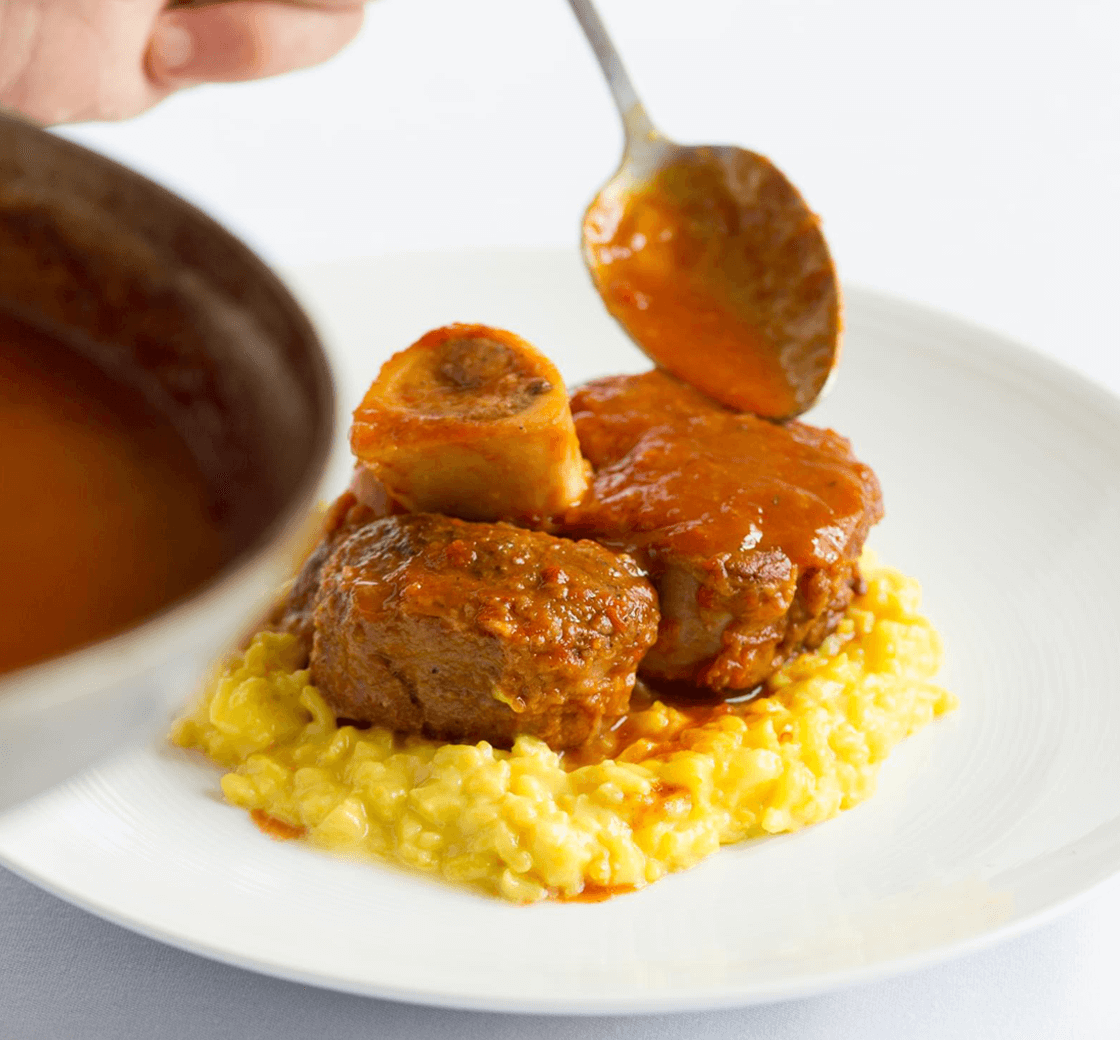
Braising - searing at a high temperature, then finishing in a liquid at a lower temperature to infuse flavor - can add umami and more to pretty much any meal! And the best part is, it creates tender, juicy dishes with a minimum of effort. We'll master this technique as we make a braised banquet of: Guinness-braised short ribs with creamy polenta; braised chicken thighs with mushrooms and balsamic vinegar and braised fennel.
 One 3 Hour Lesson
 Level 2
 $150
$150
You will work in teams to execute the class menu. At the end of class, participants gather to enjoy the food they have prepared. Wine is served with meals in most classes. All class menus are subject to change. While a snack platter is offered in both morning and evening classes, you may want to consider a light snack before joining us for class. Students are encouraged to bring a light lunch or dinner to all pastry classes.
You will work in teams to execute the class menu. At the end of class, participants gather to enjoy the food they have prepared. Wine is served with meals in most classes. All class menus are subject to change. While a snack platter is offered in both morning and evening classes, you may want to consider a light snack before joining us for class. Students are encouraged to bring a light lunch or dinner to all pastry classes.
Although it contains vast areas of arid landscape, the Middle East is a fertile spot on the culinary map. Over the years, various empires have ruled the region's countries, leaving their imprint on the colorful, aromatic and diverse flavors. Recipes are dominated by spice blends, in-season vegetables and fruits, grains, olives and olive oil, nuts, herbs, and pickled and preserved foods. From Beirut, the “Paris of the Middle East,” to Jerusalem, considered the oldest city in the world, you will get a taste of the incredible culinary heritage with a magnificent vegetarian menu of hummus; tabbouleh; spicy falafel, tahini sauce; baba ghanoush and homemade pita.
You want to make great food in a minimum amount of time, but don't have a clue how to go about it. Or you're on your own for the first time and have discovered that eating out is expensive and takeout is tiresome! You need a small repertoire of dishes for daily dining, but you can barely manage instant coffee. Does this sound like you? Then this is the course to take. We assume you know nothing --- absolutely nothing --- about cooking and take it from there. In three relaxed, fun-filled classes, we'll get you on your cooking feet, teaching you how to prepare simple, healthful, delicious food. You'll learn about basic cooking equipment and menu planning; knife skills, including vegetable chopping and paring; how to make salad, vinaigrette, and other easy no-cook dishes; how to roast garlic and root vegetables; how to prepare delicious pasta; how to sauté and roast meats and more; and how to make desserts in minutes. You will learn to make three complete meals in three easy lessons, including: guacamole and chips, make-your-own taco bar, tres leches cake; classic Caesar salad, roast Cornish hens with root vegetables, and blueberry crisp; shrimp cocktail and garlic bread, classic fettuccini alfredo, arugula and radicchio salad with apples and glazed walnuts, and ice cream tiramisu
Master the art of baking perfect Focaccia in this hands-on class! Discover the secrets to a satisfyingly textured flatbread, from mixing the simple dough to achieving an airy crumb and crisp crust. Learn expert techniques for hydration, the crucial first rise, and the signature dimpling. Elevate your Focaccia with gourmet toppings: thinly sliced Yukon gold potatoes, sweet caramelized yellow onions, vibrant plum tomatoes, fragrant fresh rosemary, rich grated parmesan, and briny Kalamata olives. Leave with the confidence to bake exquisite Focaccia and impress with sophisticated flavor combinations!
Make the one-pot profusion of Spanish flavors that paella comprises --- seafood, chicken, chorizo, rice and more --- come to life. You'll learn to make masterful cuttlefish-ink paella and paella from Valencia, in addition to some spectacular Spanish tapas. Your menu includes: garlic shrimp; tortilla española; arroz negro paella; and paella valenciana (paella with shrimp, chicken and chorizo).

Ranked as America’s Best Culinary School (USAToday 2019), our roster of Chef-Instructors have run top kitchens around the globe.


 Login/Register
 Calendar
 Gift Cards
 Login/Register


