We are currently experiencing issues with our gift card processing system. Our team is actively working on a solution to restore service.

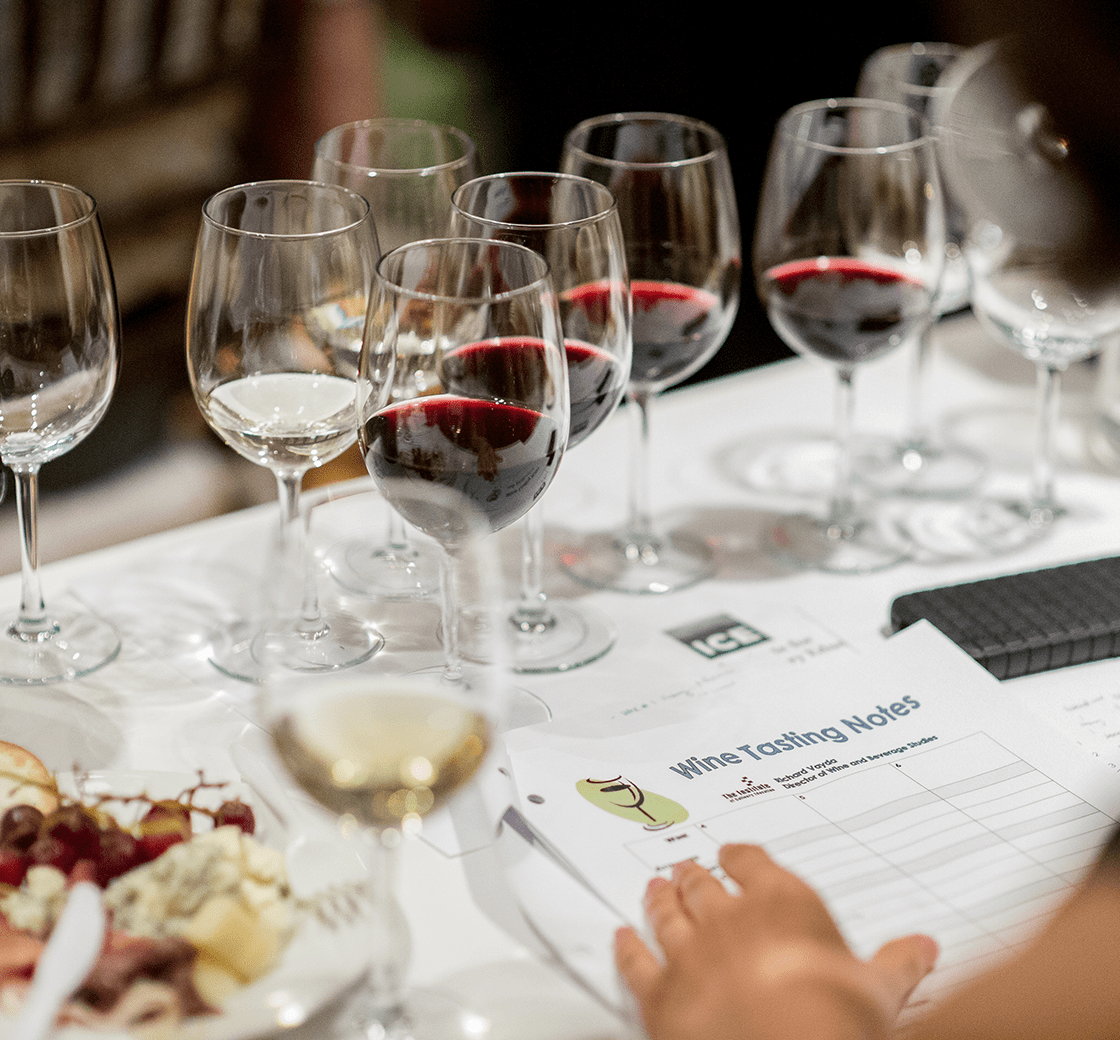
What could be better than wine and cheese --- except, perhaps, French wine and cheese. Join ICE's resident sommelier, Richard Vayda, for a tour of some of France's best offerings in each category. The class will include discussions of major French wine regions, as well as the origin and processes behind various cheese types, from fresh and creamy to aged and funky. Tastings and pairings of a wide selection of both will highlight the evening. We'll taste at least nine wines, plus matching cheeses.
 One 2 Hour 15 Minutes Lesson
 Level 1
 $125
$125
You will work in teams to execute the class menu. At the end of class, participants gather to enjoy the food they have prepared. Wine is served with meals in most classes. All class menus are subject to change. While a snack platter is offered in both morning and evening classes, you may want to consider a light snack before joining us for class. Students are encouraged to bring a light lunch or dinner to all pastry classes.
You will work in teams to execute the class menu. At the end of class, participants gather to enjoy the food they have prepared. Wine is served with meals in most classes. All class menus are subject to change. While a snack platter is offered in both morning and evening classes, you may want to consider a light snack before joining us for class. Students are encouraged to bring a light lunch or dinner to all pastry classes.
Embark on a culinary journey through Iran with our "Essentials of Persian Cooking" class. Discover the secrets of authentic Persian cuisine as you learn to prepare classic dishes like Tahdig, a crispy rice dish, the savory Fesenjan stew, the vibrant Kuku Subzi, and the refreshing Cucumber and Tomato Salad. Our expert chef will guide you through the techniques and ingredients that make Persian food so unique and delicious.
From bibimbap to bulgogi, the signature dishes of Korea have seduced America with intoxicating flavors. Sweet-spicy flavor combos are popular, as are the vegetables, meat and seafood that are featured in main dishes as well as in banchan, the Korean assortment of side dishes that appears in most traditional meals. You will learn to make dakgangjeong (hot chicken wings); bulgogi (grilled seasoned sliced beef) with assorted banchan; and bibimbap (seasoned vegetable rice bowl).
Come join NYC’s longest running wine course. Over its 45+ year history, thousands of students, food and wine professionals and the wine interested public alike, have participated in this program. This six-session course, crafted by ICE director of wine studies Richard Vayda, uses grape varietals, as well as winemaking regions, as the keys to understanding the full wine spectrum. You will receive a thorough introduction to winemaking, tasting, laws and labeling as you learn about wine components and taste some of the world’s most celebrated wines. In these six sessions, you will sample up to 60 wines! Session 1: Winemaking and Wine-Tasting Basics. Session 2: France: The Wines and Grapes of Burgundy and Bordeaux. Session 3: The Major Wines and Grape Varieties of Italy. Session 4: Spanish and other Warm-Climate Wines. Session 5: Wine Tour of the US West Coast. Session 6: A Tour of Sparkling Wine from Around the World.
Once you master essential cooking techniques, you possess the culinary grounding to cook both classical cuisines and the latest cooking styles. These full-participation classes teach fundamental skills, not just recipes. Most important, you'll gain the experience you need to cook with confidence and pleasure---without relying strictly on recipes. Each class culminates with a student-prepared meal. The course consists of four 6-hour classes. Fine Cooking 1 is a prerequisite to Fine Cooking 2. The course completes in four days.

Ranked as America’s Best Culinary School (USAToday 2019), our roster of Chef-Instructors have run top kitchens around the globe.


| (Separate multiple addresses with commas like: john@aol.com, jane@aol.com) | |


 Login/Register
 Calendar
 Login/Register


